
Signature: Ukmin5wzfqbXdi3PZ/asPTGtZAI8WqDSGzefUdtQ9o8tlb0D2WmtOg7dNzwSmH+6FGwMrpmzME1CU3sQZ8Gmbot/fXu91HSuXSt9DMgR4zPH9hTEqxRJmpIvEYswm9aHrh3Edeq+I2Cfr3pf0OIpRtYwTi4ZfKgKIBYjqvUobFoxUnZc/+JSwo50sATnXX6iOhw9fctI2t9FtOg0Yh1tkC4IoIlPzv11Pb9K3sBd//w2xP42SlduMQNknfrDUbKwZLfU76u10NPM/gNB2CV1cCJaUnP7X8xIta48Gmept2Rn/2uy3fIk1NqA23TNMrtobpPC2B0cNBpaFYuKyasm0PmVVEwnyglI+lhio2WkXoOIKQRIe4Z+cM5aAWpuuKba2z7FCXRDU2NrGA+HPoFkMMzSWKxwFyASNdBDTaTBdKioYMeEgpvGRY8dYnl9ABNpfJ0VNiGoA7oJzM/ay+8UtQYQhZLy0C/M/XR6VBYIcIMmK9ATfBQV5If+cuAi/JFN9tZvJeOhiFi4uVXeM3T2/LvfrGQ/ECJoSKqrWfwISo92RcDIMhMb3dvwHvkQctunzCoCPlMombpmWBJNTHcQghvKgIdhdqo7V+HqX/GJif5UhIuU+SvhWXv/mX+NSau3wqV6r+P6vV95Iwv/EeSAUhg5hsKG0waLVdmeQqapvvWA6VcWGOsqtmMOIVnyOmNU6xu3odsG3aub13tGaXA/0llDCdSycrNIgxbfD39iTpjZAGJhXE1E0iUE56nvSJJgfzpJJZnhNf/L8qgvoA79IYp/9o4eOOLbW9UBYYkAV2Nr76MzpDvDFT7GV+vZY/hcjAyzrHGXrZH6j/3cCayGIxmiw6s5qhMve8XoY9CAHeIWvUN34HQglfH6l5LSQuITD1+Gv8juxkxYKNthf0siFxQgYw1spMlOzeWE8RuY1Vla7ubfDHjtQ6WdtRgoYYGYe0d+sabfNAlVhqbivEPC+k44nNZaXq75t8qImlQ5mPw=
In the heart of the Pentagon, two high-profile leaders rolled up their sleeves and took on a grueling physical test that quickly captured the nation’s attention. The Pete and Bobby Challenge DOD fitness event, born from a friendly yet intense competition between Defense Secretary Pete Hegseth and Health and Human Services Secretary Robert F. Kennedy Jr., has evolved into something far greater than a one-time spectacle. It represents a bold call to action for Americans to prioritize strength, resilience, and overall wellness at a time when obesity rates and lifestyle-related diseases continue to challenge public health.
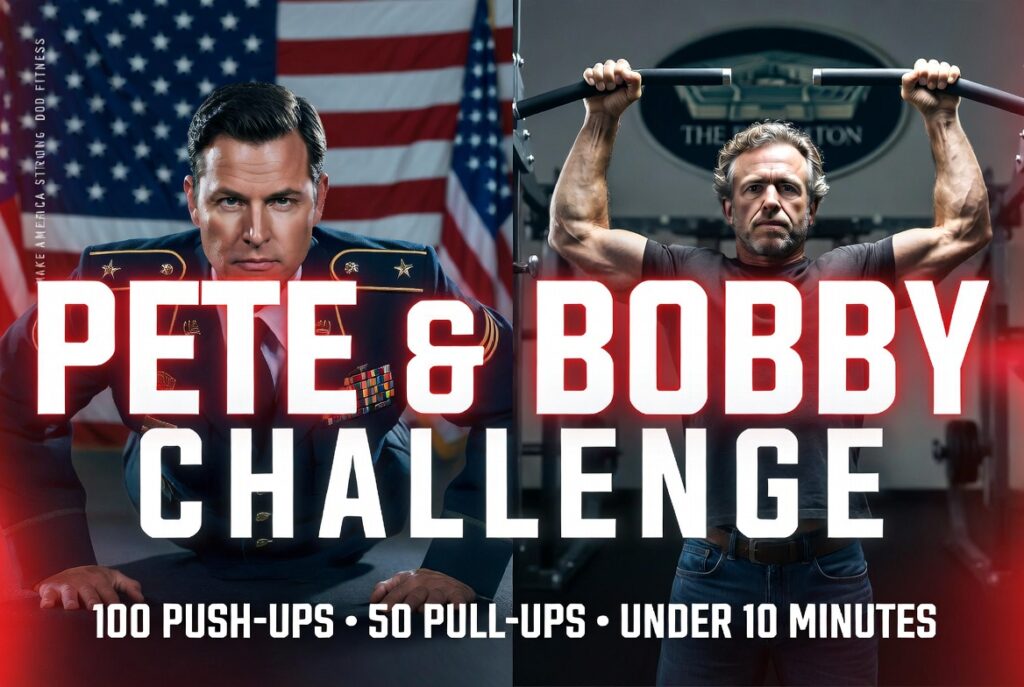
This challenge isn’t just about reps and time caps—it’s about reclaiming physical vitality as a cornerstone of personal and national strength. With its straightforward requirements of completing 100 push-ups and 50 pull-ups within 10 minutes, the Pete and Bobby Challenge DOD fitness benchmark draws inspiration from elite military training standards while remaining accessible enough to motivate everyday individuals. As leaders in the Trump administration promoted the “Make America Healthy Again” initiative, this fitness test became a viral symbol of leadership by example, blending defense readiness with broader public health goals.
What started as a head-to-head showdown in the Pentagon gym has since inspired service members, civilians, politicians, and fitness enthusiasts across the country to test their limits. In the following sections, we’ll dive deep into the origins, mechanics, benefits, training strategies, and cultural impact of this phenomenon, exploring how it ties into military fitness traditions, everyday wellness, and the ongoing conversation about America’s physical preparedness.
The Origins of the Pete and Bobby Challenge DOD Fitness Movement
The Pete and Bobby Challenge DOD fitness initiative traces its roots to a pivotal moment in August 2025 when RFK Jr. visited the Department of Defense facilities. Surrounded by active-duty service members, Hegseth and Kennedy Jr. demonstrated their commitment to fitness by tackling the demanding workout in real time. Kennedy, known for his long-standing advocacy on health issues, completed the challenge in jeans, underscoring that determination matters more than perfect gear.
This wasn’t a scripted photo opportunity but a genuine effort to highlight the connection between physical fitness and effective leadership. Defense priorities have always emphasized rigorous physical standards for troops, and the involvement of the HHS Secretary bridged the gap between military readiness and civilian health. The challenge quickly gained traction through official channels, social media clips, and news coverage, positioning it as a unifying effort amid broader discussions on national resilience.
From its Pentagon launch, the movement spread organically. Service members posted their times, civilians attempted modified versions, and public figures issued their own challenges. It aligned seamlessly with efforts to address declining fitness levels in both military recruits and the general population, where sedentary lifestyles and poor nutrition have become pressing concerns. The Pete and Bobby Challenge DOD fitness test thus emerged as a practical, measurable way to encourage progressive improvement in strength and endurance.
Breaking Down the Rules and Standards of the Pete and Bobby Challenge
At its core, the Pete and Bobby Challenge DOD fitness test requires participants to complete 100 push-ups and 50 pull-ups in any order, all within a 10-minute window. There are no mandatory rest periods specified, though strategic pacing is essential for success. Elite performers aim for under five minutes, as demonstrated by top military participants who set the benchmark during the initial event.
Push-ups must follow standard form—chest to ground, full extension at the top—while pull-ups demand a dead hang start with chin clearing the bar. The flexibility in sequencing allows athletes to alternate movements, minimizing localized fatigue. This format tests not only raw muscular strength but also cardiovascular endurance and mental toughness under time pressure.
Official guidelines emphasize proper technique to prevent injury and ensure the challenge accurately reflects functional fitness. Variations for beginners might include knee push-ups or assisted pull-ups, making the Pete and Bobby Challenge DOD fitness adaptable across fitness levels while maintaining its core integrity as a demanding standard.
Why the Pete and Bobby Challenge Matters for Military Readiness
Military organizations have long used bodyweight exercises like push-ups and pull-ups to assess combat readiness. The Pete and Bobby Challenge DOD fitness test amplifies this by creating a public-facing standard that mirrors the physical demands soldiers face in training and deployment. Upper body pushing and pulling strength are critical for tasks ranging from carrying gear to obstacle navigation.
By spotlighting these movements, the challenge draws attention to potential gaps in recruit preparedness. Data from various branches has shown that many incoming service members struggle with pull-up requirements, highlighting the need for earlier emphasis on functional strength in schools and communities. Hegseth’s leadership in defense reinforced how such benchmarks contribute to overall force lethality and resilience.
Beyond individual performance, widespread participation fosters a culture of fitness within the armed forces and beyond. When leaders publicly embrace the challenge, it normalizes high standards and motivates troops to exceed them, ultimately enhancing unit cohesion and operational effectiveness.
Health Benefits of Tackling the Pete and Bobby Challenge DOD Fitness Test
Engaging with the Pete and Bobby Challenge delivers multifaceted health improvements. The high volume of push-ups builds chest, shoulder, and tricep endurance while strengthening the core for stability. Pull-ups target the back, biceps, and forearms, promoting balanced upper body development and improving posture.
Cardiovascular gains come from the sustained effort within the time cap, elevating heart rate and enhancing aerobic capacity. Regular practice also boosts metabolic rate, aiding fat loss and muscle preservation—key factors in combating obesity. Mental health benefits include increased confidence, discipline, and stress resilience forged through consistent training.
Participants often report better sleep, improved mood, and heightened energy levels. For older adults like RFK Jr., who completed the challenge impressively at an advanced age, it demonstrates that age-appropriate progression can yield remarkable results when combined with dedication and smart recovery practices.
How to Prepare for the Pete and Bobby Challenge: Training Strategies
Effective preparation for the Pete and Bobby Challenge DOD fitness test begins with a structured buildup over several weeks. Beginners should start by mastering form and gradually increasing volume. A sample progression might involve three to four weekly sessions focusing on push-up and pull-up ladders, supplemented by accessory work for shoulders, back, and core.
Intermediate trainees can incorporate EMOM (every minute on the minute) workouts or supersets to simulate the time constraint. Advanced athletes benefit from high-intensity interval training that mimics the full challenge while allowing recovery analysis. Nutrition plays a pivotal role—adequate protein intake supports muscle repair, while balanced carbs fuel performance.
Tracking progress with timed practice runs helps identify weaknesses. Rest days are equally important to avoid overtraining, with emphasis on mobility work, sleep, and hydration. This holistic approach ensures sustainable gains rather than short-term burnout.
Equipment and Setup Needed for the Pete and Bobby Challenge
One of the appeal factors of the Pete and Bobby Challenge DOD fitness is its minimal equipment requirements. A sturdy pull-up bar is essential, whether at a gym, home rig, or outdoor park. For push-ups, a flat surface suffices, though yoga mats or padded floors enhance comfort during high volumes.
Wear breathable clothing and supportive shoes, though Kennedy’s jeans-and-T-shirt approach proved that formal attire isn’t a barrier. Timing devices like stopwatches or smartphone apps track the 10-minute window accurately. For group events, having spotters or judges ensures form compliance and safety.
Scaling options include resistance bands for assisted pull-ups or elevated surfaces for easier push-ups, broadening accessibility without diluting the challenge’s essence.
Common Mistakes to Avoid During the Pete and Bobby Challenge
Many first-timers underestimate the cumulative fatigue in the Pete and Bobby Challenge DOD fitness test. Rushing early reps often leads to form breakdown, increasing injury risk and reducing total output. Pacing is crucial—alternating movements and incorporating brief strategic pauses can preserve energy.
Neglecting warm-ups is another pitfall. Dynamic stretches and lighter sets prepare joints and muscles for the intense workload. Overlooking recovery between attempts can stall progress; listening to your body prevents setbacks. Hydration and proper breathing techniques also make significant differences in endurance.
By studying successful completions from military personnel and public figures, participants can refine their strategies and set realistic interim goals.
Comparing the Pete and Bobby Challenge to Traditional Military Fitness Tests
The Pete and Bobby Challenge stands out among military assessments due to its pure focus on upper body endurance within a compressed timeframe. Traditional tests like the Army Combat Fitness Test incorporate broader elements such as running, lifting, and agility. This challenge hones in on pulling and pushing power, complementing rather than replacing comprehensive evaluations.
Its simplicity makes it more replicable for civilians compared to obstacle courses or timed runs. Yet it retains the grit associated with special operations standards, where high pull-up and push-up counts signal exceptional conditioning.
Real-World Results: Times and Experiences from Participants
During the inaugural Pentagon event, participants posted impressive times. Some service members finished well under five minutes, while Hegseth and Kennedy delivered strong showings that inspired others. Public attempts have ranged widely, with many sharing transformation stories after weeks of dedicated training.
Everyday enthusiasts report not just physical changes but renewed motivation for healthier lifestyles. Schools and workplaces have begun incorporating similar tests, fostering community accountability and collective improvement.
Nutrition Tips to Support Pete and Bobby Challenge Training
Fueling the body correctly amplifies results in the Pete and Bobby Challenge. Prioritize whole foods rich in lean proteins, complex carbohydrates, and healthy fats. Pre-workout meals might include oats with eggs, while post-challenge recovery benefits from protein shakes or balanced plates with vegetables.
Micronutrients like magnesium and vitamin D support muscle function and bone health, especially important for repetitive impact activities. Hydration strategies, including electrolyte balance, prevent cramps during high-rep sets. Long-term, sustainable eating patterns aligned with the “Make America Healthy Again” ethos enhance overall outcomes beyond the challenge itself.
Injury Prevention and Recovery for Challenge Participants
High-volume bodyweight training demands respect for recovery. Incorporate mobility routines targeting shoulders, wrists, and elbows to maintain joint health. Strength imbalances between pushing and pulling muscles should be addressed through balanced programming.
Active recovery methods like walking, swimming, or yoga complement intense sessions. Listening to pain signals versus normal discomfort helps differentiate issues requiring rest from those signaling progress. Professional guidance from trainers or physical therapists can personalize plans, particularly for those with prior injuries.
The Cultural Impact of the Pete and Bobby Challenge on American Fitness
The Pete and Bobby Challenge has transcended fitness circles to become a cultural touchstone. Social media challenges, workplace competitions, and family attempts have proliferated, creating shared experiences around health goals. It challenges stereotypes about aging and capability, as evidenced by Kennedy’s performance.
Media coverage amplified its reach, sparking conversations on leadership accountability and public health policy. It reinforces the idea that fitness is a patriotic endeavor, linking personal strength to national vitality.
Scaling the Challenge for Different Fitness Levels
Accessibility remains a strength of the Pete and Bobby Challenge. Novices can aim for reduced targets like 50 push-ups and 20 pull-ups, gradually scaling up. Time caps can extend initially before tightening toward the 10-minute standard.
Advanced modifications include adding weight vests or strict form requirements. This progressive framework ensures inclusivity while preserving the challenge’s demanding spirit, encouraging lifelong fitness journeys.
Integrating the Pete and Bobby Challenge into Weekly Workout Routines
Incorporating the full test or its components weekly builds consistency. One approach involves using it as a benchmark every four weeks while training specific weaknesses in between. Full-body programs that include squats, deadlifts, and core work create balanced development.
Periodization—varying intensity and volume—prevents plateaus. Tracking metrics in a journal or app provides motivation through visible improvements over time.
Mental Toughness Lessons from the Pete and Bobby Challenge
Pushing through the final reps of the Pete and Bobby Challenge cultivates mental fortitude applicable to all life areas. The discomfort of high-repetition training teaches resilience and focus under pressure, mirroring real-world demands.
Visualization, positive self-talk, and goal-setting enhance performance. Many participants describe a profound sense of accomplishment that boosts self-efficacy far beyond physical metrics.
Community and Group Variations of the Pete and Bobby Challenge
Group settings amplify the experience through friendly competition and mutual support. Team relays, partner workouts, or virtual challenges connect participants across distances. Military units and civilian gyms have hosted events that build camaraderie while advancing fitness.
These variations maintain the core standards while adding social elements that sustain long-term engagement.
Long-Term Fitness Transformations Inspired by the Challenge
Countless stories highlight sustained changes following initial attempts at the Pete and Bobby Challenge. Improved body composition, better energy, and enhanced athletic performance often follow consistent practice. It serves as a gateway to broader lifestyle upgrades, including better nutrition and sleep habits.
The challenge’s emphasis on measurable goals helps maintain accountability, turning one-time efforts into habitual excellence.
Featured Snippet Opportunity: The Pete and Bobby Challenge DOD fitness test requires completing 100 push-ups and 50 pull-ups in under 10 minutes. It promotes upper body strength, endurance, and national health awareness as championed by Pete Hegseth and RFK Jr.
Comparison Table: Pete and Bobby Challenge vs. Other Popular Fitness Tests
| Aspect | Pete and Bobby Challenge | Army PT Test (Sample) | Murph Hero Workout |
|---|---|---|---|
| Primary Movements | Push-ups & Pull-ups | Push-ups, Sit-ups, Run | Pull-ups, Push-ups, Squats, Run |
| Time Constraint | 10 minutes | Varies by age/gender | For time (often 30-60+ min) |
| Equipment Needed | Pull-up bar | Minimal | Pull-up bar, vest (optional) |
| Accessibility | High with modifications | Standardized | Advanced |
| Focus | Upper body endurance | Full body + cardio | Full body stamina |
This table illustrates how the Pete and Bobby Challenge offers a focused, efficient alternative while complementing more comprehensive regimens.
Key Takeaways
- The Pete and Bobby Challenge emphasizes achievable yet demanding bodyweight strength standards that build functional fitness.
- Leadership participation by Hegseth and Kennedy has significantly boosted visibility and motivation.
- Proper preparation, form, and recovery are essential for safe, effective participation across all levels.
- The challenge supports broader goals of military readiness and public health improvement.
- Consistent engagement can lead to transformative physical and mental benefits.
Frequently Asked Questions (FAQ)
What exactly is the Pete and Bobby Challenge DOD fitness test?
It is a fitness benchmark requiring 100 push-ups and 50 pull-ups completed in any order within 10 minutes.
Who created the Pete and Bobby Challenge?
Defense Secretary Pete Hegseth and HHS Secretary Robert F. Kennedy Jr. introduced it during a Pentagon event.
Is the challenge suitable for beginners?
Yes, with scaled versions and progressive training, individuals of varying abilities can work toward the full standard safely.
How long should I train before attempting the full Pete and Bobby Challenge?
Most people benefit from 4-8 weeks of targeted preparation, depending on starting fitness levels.
What if I can’t do many pull-ups yet?
Use assisted variations, negative reps, or band support while building strength gradually.
Does age matter for participating in the Pete and Bobby Challenge?
No—participants of all ages, including older adults, have successfully completed versions tailored to their capabilities.
How does this challenge relate to military fitness?
It reflects key upper body demands in military training and promotes standards that enhance overall readiness.
Can I do the challenge at home? Absolutely, as long as you have access to a pull-up bar and safe space for push-ups.
Are there official records or leaderboards?
Various military and civilian groups track times informally, with top performers often sharing through social channels.
What are the main benefits beyond strength?
Improved endurance, mental toughness, posture, and motivation for sustained healthy habits.
Conclusion
The Pete and Bobby Challenge DOD fitness movement stands as a powerful reminder that strength begins with individual action and collective commitment. By embracing this test, Americans from all walks of life can contribute to a healthier, more resilient nation. Whether you’re a seasoned athlete chasing sub-five-minute times or a newcomer building foundational strength, the challenge offers a clear path forward. Its enduring legacy lies not just in the reps completed but in the mindset it cultivates—one of discipline, perseverance, and unwavering dedication to personal and national vitality. Start today, track your progress, and become part of this inspiring chapter in America’s fitness story.