When people type certain search terms into Google, the results can surprise them. One of those terms that keeps popping up year after year is peter orszag hair. It is not every day that an economist and investment banking CEO becomes the subject of hairstyle discussions, yet that is exactly what has happened. Peter Orszag has built a career that spans the highest levels of government and Wall Street, yet online curiosity about his appearance refuses to fade. This article digs deep into the facts, the rumors, the consistent style choices, and what it all means for anyone interested in professional grooming or simply curious about a high-profile figure.
The conversation around peter orszag hair started gaining real traction during his time in the Obama administration and has continued through his rise at Lazard. What makes the topic interesting is how little he has ever said about it. He has never addressed the speculation in interviews or public statements. Instead, his hair has remained a steady, low-key element of a carefully maintained professional image. In the pages that follow, we will examine the timeline of his appearance, the specific cut that became known as a power style, the old toupee theories, the current reality of natural thinning, and the broader lessons about how grooming intersects with authority in finance and policy circles.
Understanding peter orszag hair requires looking past the jokes and memes. It means placing the visual details in the context of a man who has spent decades under bright lights, television cameras, and high-stakes meetings. The style is simple. The consistency is striking. The public reaction has been disproportionate to the actual changes visible over time. By the end of this long-form exploration, readers should walk away with a clearer picture of both the man and the myths that have followed him.
Who Peter Orszag Is and Why His Appearance Draws Attention
Peter Richard Orszag was born on December 16, 1968, in Boston, Massachusetts, and grew up in Lexington. His father, Steven Orszag, was a mathematician and professor, and his mother, Reba, ran a research company. The family background includes Hungarian Jewish immigrant roots on the paternal side. From an early age, academic excellence defined his path. He graduated with high honors from Phillips Exeter Academy, then earned a bachelor’s degree in economics summa cum laude from Princeton University in 1991. As a Marshall Scholar, he continued at the London School of Economics, completing a master’s in 1992 and a doctorate in 1997.
His career moved quickly into the heart of economic policy. During the Clinton years he worked on the Council of Economic Advisers and later as a special assistant for economic policy. He spent time at the Brookings Institution, where he helped launch the Hamilton Project and directed work on retirement security. In 2007 he became director of the Congressional Budget Office, and in 2009 President Barack Obama appointed him director of the Office of Management and Budget. At the time he was one of the youngest people to hold that Cabinet-level role. After leaving government he moved into finance, first at Citigroup and then at Lazard, where he rose to lead the financial advisory business before becoming CEO in 2023 and CEO and chairman in 2025.
This résumé explains why cameras follow him. High-profile roles mean constant media exposure. Every hearing, every television appearance, every conference panel produces photographs and video that get scrutinized. In that environment, small details of appearance become topics of conversation. The interest in peter orszag hair is less about fashion and more about the way public figures are observed under pressure. People notice consistency. They notice changes. They invent explanations when the visual record does not match their assumptions.
His personal life has also stayed relatively private despite the visibility. He has five children from different relationships and has been married to CNN journalist Bianna Golodryga since 2010. The combination of intellectual achievement, policy influence, and later corporate leadership creates a persona that invites commentary on everything from policy ideas to wardrobe choices. Hair simply became one more element in that ongoing public conversation.
The Evolution of Peter Orszag Hair Across Decades
Looking at photographs from different periods of his career reveals a gradual, natural progression rather than sudden transformations. In the late 1990s and early 2000s, during his Brookings and early government years, his hair appeared fuller and darker. The style was already short to medium, neatly arranged with a side part. It was the classic clean professional look favored by many in Washington policy circles.
By the time he reached the Congressional Budget Office and then the Office of Management and Budget, subtle shifts were visible. The hairline at the temples showed the first signs of recession common in men in their forties. Density on top remained solid, and the overall cut stayed consistent. Bright studio lights and high-definition cameras of the late 2000s made every strand more noticeable than older film or lower-resolution television had done. That technological change amplified discussion more than any actual dramatic alteration in his appearance.
Through the 2010s, while he worked in finance, the thinning continued at a typical pace for male pattern changes. The crown area became less dense in certain lighting, yet hair remained present across the scalp. He never shifted to a dramatically shorter cut, never adopted a full fade, and never appeared to chase trends. The same side-swept, controlled length persisted. Color gradually moved from darker brown toward a more salt-and-pepper mix, again following a natural timeline rather than any abrupt dyeing or covering.
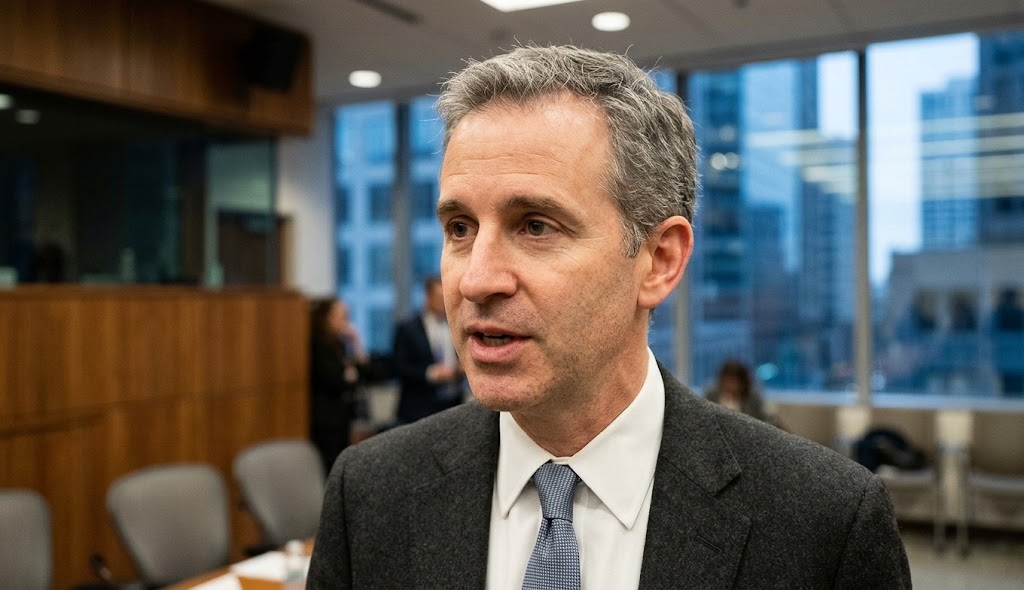
By the mid-2020s, at age 57, the pattern is clear. There is visible thinning consistent with androgenetic alopecia, the common form of male pattern hair loss that affects a large percentage of men by their fifties. The temples have receded further. The top shows more scalp under strong light. Yet he is not bald. Hair is still styled in the familiar short-to-medium length with a defined part. The overall impression remains that of a well-groomed executive who has simply aged in public.
This slow evolution is important. Sudden changes often fuel stronger rumors. Gradual ones tend to match ordinary biology. The photographic record across more than two decades supports the latter. Anyone studying peter orszag hair can see the continuity of style alongside the expected effects of time.
Defining the Signature Style Often Called the Power Cut
Stylists and image consultants who have commented on the look over the years describe it as a classic executive side-part. The sides are kept relatively short and tapered. The top retains enough length to comb neatly into place without creating volume or height that would look dated or overly styled. Product use appears minimal. The finish is matte rather than shiny, avoiding any sense of heavy gel or grease.
This approach has been labeled the power cut in some discussions because it projects authority without drawing attention to itself. In environments where substance is supposed to matter more than surface, a low-maintenance, consistent hairstyle signals discipline and focus. It does not compete with the message being delivered in a hearing room or on a panel. It simply frames the face in a reliable way.
The cut works across different lighting and camera angles better than many more elaborate styles. Short sides reduce the risk of looking unkempt after a long day of meetings. The controlled top length keeps the overall silhouette professional whether the setting is a formal dinner or a casual strategy session. Color maintenance has also stayed understated. There is no evidence of dramatic dyeing to hide gray. The gradual silvering has been allowed to appear, which itself can read as confidence rather than vanity.
For men in similar professional roles, the appeal of this approach is practical. It requires regular but not excessive barber visits. It travels well. It photographs cleanly. It avoids the extremes of both overly trendy modern cuts and severely conservative older styles. In that sense, the look associated with peter orszag hair offers a useful case study in restrained professional grooming.
Early Rumors and the Toupee Speculation of the Obama Years
The most colorful chapter in the discussion of peter orszag hair arrived around 2009 and 2010. During his time as OMB director, several media outlets and blogs began openly wondering whether the hair on top was natural. A piece in the Observer referred to it as a furry suitcase balanced on the top of his head. Gawker published an investigation that examined photographs from different angles, pointing to what some saw as a break between the denser top and the thinner sides. A hairpiece specialist was even consulted for commentary, though the expert had never examined the actual subject.
These stories mixed genuine visual curiosity with the irreverent tone common in political media at the time. High-definition video from White House events and congressional appearances made texture and density more visible than older coverage had allowed. Some observers noted that the top appeared consistently dark and full relative to the graying or thinner areas near the temples. Others simply found the contrast amusing and turned it into running commentary.
What never emerged was any confirmation. No statement from Orszag or his representatives addressed the speculation. No reputable reporting uncovered receipts, suppliers, or insider accounts of hair systems. Photographs from earlier years showed a similar overall structure, only with greater density. The gradual nature of later thinning further undermined the idea of a fixed artificial piece. If a toupee had been in place during the White House years, the later appearance of natural recession and reduced density would have required continuous, highly skilled adjustments that left no visible traces across hundreds of public images.
The rumors eventually settled into the background, resurfacing mainly when new photographs circulated or when search algorithms amplified older content. They remain part of the folklore surrounding the man, yet they rest on interpretation rather than verified fact. The more careful reading of the visual record points toward natural hair that simply photographed in particular ways under certain conditions.
Is Peter Orszag Bald? Examining the Current Reality
The short and accurate answer is no. Peter Orszag is not bald. He experiences the kind of progressive thinning that is statistically common among men in their fifties. Medical literature places the prevalence of noticeable male pattern hair loss at roughly half of men by age fifty, with higher rates thereafter. The pattern typically involves recession at the temples and reduced density at the crown while hair remains present elsewhere.
Public appearances in recent years show exactly that. Under studio lighting the scalp is visible through the hair on top. The hairline sits farther back than it did twenty years earlier. Color has lightened. Yet the overall coverage is still there, styled in the same controlled manner. There is no evidence of a complete loss of hair, no decision to shave the head, and no public confirmation of surgical or non-surgical restoration procedures.
Lighting and camera technology play large roles in perception. Modern high-resolution cameras and bright LED panels can make thinning more obvious than softer older lighting did. Angles that catch the top of the head emphasize any reduction in density. Social media then amplifies selected frames. The result is a search volume for terms related to baldness that exceeds what the actual appearance justifies.
The consistency of the styling choice also matters. By continuing to wear the hair short to medium with a side part rather than compensating with longer lengths or heavy product, the look remains honest about the underlying density. Some public figures choose more aggressive covering techniques. Others embrace a closely cropped or fully shaved style. Orszag has stayed with the middle path that characterized his earlier years. That choice itself has become part of the public reading of peter orszag hair.
How Professional Image Intersects with Grooming Choices
In both Washington and Wall Street, appearance functions as a quiet form of communication. It is rarely the main message, yet it influences first impressions and ongoing perceptions of competence, reliability, and seriousness. Research from institutions such as Princeton and various business schools has shown that grooming details affect snap judgments about professionalism within seconds. Hair sits near the top of the list of visible cues because it frames the face and signals attention to detail.
Orszag’s approach aligns with the expectations of the environments he has inhabited. Policy roles reward the appearance of focus and restraint. Investment banking values polish without flash. A neat, consistent cut satisfies both without requiring constant reinvention. The fact that the same basic structure has lasted across two decades of intense public exposure suggests a deliberate preference for stability over experimentation.
This does not mean the style is without thought. Maintaining a clean side part and tapered sides requires regular professional attention. Choosing not to pursue visible restoration treatments or dramatic color correction also reflects a calculation about authenticity and priorities. In a culture that often pushes men toward aggressive anti-aging measures, the decision to let natural changes show can itself project confidence.
For younger professionals watching these choices, the lesson is less about copying one specific cut and more about understanding the function of grooming. Hair that stays out of the way of the work, that photographs cleanly, and that remains consistent over time supports rather than distracts from the substance of a career. The discussion around peter orszag hair ultimately circles back to that principle.
Practical Notes on Achieving a Similar Professional Look
Men interested in a comparable style can start with a clear conversation at the barber. Request a short-to-medium length on top, roughly one and a half to two inches depending on density and texture, with tapered sides and a clean side part. The goal is control without stiffness. Avoid extreme fades or undercuts that create sharp contrast if the overall aim is understated authority.
Product selection should lean matte. A light cream or soft paste can provide hold and texture without shine. Heavy gels or high-hold pomades tend to look dated or overly formal in contemporary professional settings. Application should be light, focusing on separation and direction rather than volume.
For those experiencing thinning, the same basic structure often works well. Keeping the top shorter reduces the appearance of sparse areas compared with longer lengths that can look thin and stringy. Strategic parting and careful combing can minimize the visual impact of recession at the temples. Regular trims every three to four weeks prevent the cut from growing out unevenly.
Color management is personal. Some prefer to keep gray minimal through subtle blending. Others allow it fully. The key is consistency with the rest of the image. Sudden dramatic changes draw more attention than gradual ones. Skin care and overall grooming of the face and neck also affect how hair is perceived, since contrast between hair and skin influences the impression of density.
None of these suggestions require expensive systems or medical procedures. They rely on basic barbering skill and daily maintenance. The result is a look that travels across meeting rooms, cameras, and time zones without demanding constant adjustment.
Broader Cultural Context of Hair Discussions About Public Figures
Public curiosity about the appearance of prominent people is nothing new. Politicians, executives, and celebrities have long faced commentary on weight, clothing, facial features, and hair. What has changed is the speed and volume of that commentary. Search engines, social platforms, and high-resolution media create feedback loops that keep niche topics alive long after the original moment has passed.
In Orszag’s case, the combination of early high visibility during a major economic crisis, distinctive photographic qualities under studio lights, and a steadfast refusal to engage the rumors created ideal conditions for lasting search interest. Similar patterns appear with other figures whose hair becomes a proxy for larger conversations about aging, authenticity, or status.
There is also a gendered dimension. Male public figures face less pressure around hair color and style experimentation than many women do, yet they still encounter scrutiny when natural changes become visible. The decision to leave thinning untreated can be read as strength or as neglect depending on the observer. The decision to pursue restoration can be praised as self-care or criticized as vanity. Either path invites interpretation.
These dynamics matter because they reveal more about audiences than about the individuals under discussion. People project concerns about their own aging, their own professional image, or their own sense of control onto the visible details of others. A search for peter orszag hair often begins with idle curiosity and ends with reflection on broader questions of how appearance shapes opportunity and perception.
A Timeline of Career Milestones Alongside Appearance Notes
The following table summarizes key professional stages and corresponding observations about hair drawn from the public photographic record. It is not exhaustive, yet it illustrates the parallel tracks of career progression and gradual natural change.
| Career Stage | Approximate Years | Hair Observation |
|---|---|---|
| Early policy and Brookings work | Late 1990s–mid 2000s | Fuller density, darker color, established side-part structure |
| Congressional Budget Office director | 2007–2008 | Early temple recession visible, overall density still high |
| Office of Management and Budget director | 2009–2010 | Heightened media scrutiny, consistent cut under HD cameras |
| Transition to private finance | 2010s | Gradual thinning at crown, continued short-to-medium length |
| Leadership roles at Lazard | 2016–present | Noticeable age-related thinning, salt-and-pepper color, same core style maintained |
This side-by-side view reinforces the central point. The career advanced through major institutions and high-stakes responsibilities. The hair followed an ordinary biological path while the styling choices stayed remarkably steady. The combination produced the unusual longevity of public interest in a topic that would otherwise remain private.
Quotes That Capture the Tone of Earlier Coverage
Older media treatments of the subject often mixed sharp observation with humor. One 2010 description referred to the appearance as a furry suitcase balanced on the top of his head. Another investigation asked whether the look was a toupee or simply an unusual natural growth pattern, examining photographs for signs of a dividing line between denser top sections and thinner sides. A hair specialist consulted at the time offered colorful commentary about the visual effect without claiming direct knowledge of the individual.
These quotes belong to a particular media moment when political figures faced unusually personal scrutiny. They do not constitute evidence of any specific technique or product. They do illustrate how quickly visual details can become narrative devices. Later coverage has generally been more measured, focusing on the absence of confirmation for artificial systems and the presence of ordinary aging patterns.
Lessons for Anyone Managing a Professional Image
The story of peter orszag hair offers several practical takeaways that extend beyond one individual. Consistency builds recognition and reduces cognitive load for audiences. A style that works across different settings and lighting conditions proves more useful than one optimized for a single environment. Allowing natural changes to occur rather than fighting every sign of aging can project authenticity, provided the overall presentation remains polished.
Barber relationships matter. Finding someone who understands the desired silhouette and can maintain it over years is more valuable than chasing temporary trends. Product choices should support the cut rather than dominate it. Finally, the decision about whether and how to address thinning is personal. Some men prefer medical or cosmetic interventions. Others prefer adaptation of length and styling. Both paths can succeed when executed with intention and care.
In high-visibility careers the stakes of these choices rise, yet the underlying principles remain the same. Grooming supports the work. It does not replace it. When the substance is strong, the surface details tend to settle into secondary importance, even if search engines and social media keep them circulating.
Conclusion
The enduring online interest in peter orszag hair ultimately says as much about media culture and public curiosity as it does about one man’s grooming habits. From the early policy years through the highest levels of government and into the leadership of a major financial firm, the visual record shows a consistent professional cut alongside the gradual thinning that affects many men of the same age. Rumors of artificial systems arose, circulated, and never found solid confirmation. What remains is a practical, low-drama approach to appearance that prioritizes reliability over reinvention.
Readers who came looking for a simple yes-or-no answer on baldness or wigs now have a fuller context. Those interested in professional style can extract useful principles about consistency, restraint, and adaptation. And anyone simply curious about how a public figure navigates the intersection of aging and scrutiny can see one example of a path that keeps the focus on the work rather than the hair. In the end, the most interesting aspect of the entire discussion may be how little the subject himself has ever needed to say about it.
FAQ
What is the current status of peter orszag hair in recent public appearances?
Recent photographs and video from business events and media interviews show natural age-related thinning with a receding hairline at the temples and reduced density on the crown. Hair remains present and is still styled in the familiar short-to-medium side-part cut. Color has shifted toward a distinguished mix of gray and darker tones. There is no indication of complete baldness or of any abrupt change in approach.
Did peter orszag hair ever involve a toupee or wig according to available evidence?
No credible evidence supports the claim that a toupee or wig has been used. The speculation peaked around 2009 and 2010 based on photographic interpretation under high-definition lighting. Subsequent years of gradual thinning consistent with ordinary male pattern changes further weaken the artificial-system theory. Orszag has never addressed the rumors publicly, and no investigative reporting has produced confirmation.
How has the style associated with peter orszag hair remained consistent over time?
The core structure of short tapered sides, moderate length on top, and a clean side part has been maintained across more than two decades. Length and product use have stayed restrained. Color changes have occurred naturally rather than through dramatic dyeing. This continuity is visible in images from the Brookings years through the White House period and into the present role at Lazard.
Can ordinary men adapt elements of the peter orszag hair approach for professional settings?
Yes. The principles translate easily. Request a controlled side-part cut with enough length on top for neat combing and tapered sides. Choose matte products for light hold. Maintain regular trims. For those with thinning, keeping the overall length moderate often produces a cleaner result than longer styles. The goal is a polished yet low-maintenance look that supports rather than distracts from professional responsibilities.
Why does search interest in peter orszag hair continue years after the initial rumors?
High public visibility during major policy moments, the amplifying effect of high-resolution media, and the self-reinforcing nature of search algorithms all contribute. Once a topic gains traction, new photographs or career developments can revive older commentary. The subject’s silence on the matter has also allowed speculation to persist without direct contradiction. Interest remains higher than the actual visual changes would otherwise justify.
What broader insight does the discussion of peter orszag hair offer about professional image?
It illustrates that consistency and restraint often serve high-visibility careers better than frequent reinvention. Grooming details influence first impressions, yet they function best when they remain secondary to the substance of the work. Natural aging can be integrated into a professional presentation without apology when the overall image stays intentional and polished. The case also shows how public curiosity can attach to minor details and keep them circulating long after the original moment has passed.