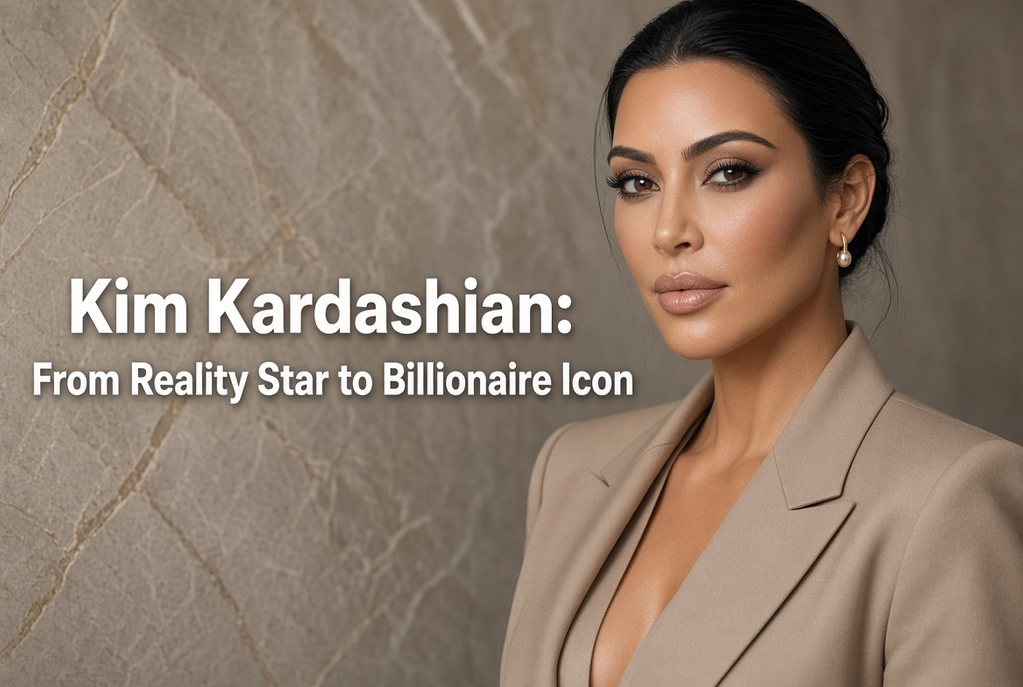
Few names in modern entertainment command the same level of attention, curiosity, and cultural conversation as Kim Kardashian. What began as a supporting role in the orbit of early 2000s celebrity culture has evolved into one of the most carefully built personal brands of the twenty-first century. She has moved far beyond the labels once attached to her, transforming visibility into ownership, influence into equity, and public fascination into a multi-billion-dollar portfolio. Readers who follow fashion, business, or simply the shifting rules of fame will find her story a masterclass in adapting to every new platform while keeping control of the narrative.
Today her presence stretches across social media, brick-and-mortar retail, television, and even the quiet corners of criminal justice reform. The same woman who once appeared on a single reality series now co-owns a shapewear and apparel company valued in the billions, maintains one of the largest social followings on the planet, and continues to expand into new categories without losing the personal connection that first drew people in. This long-form look explores how that trajectory unfolded, the decisions that shaped it, and the ways her work continues to influence conversations about body, business, and public life.
Early Life and Family Roots That Shaped Everything
Born Kimberly Noel Kardashian on October 21, 1980, in Los Angeles, she grew up in a household already familiar with high-profile attention. Her father, Robert Kardashian, was a well-known attorney whose defense work during the O.J. Simpson trial placed the family name in national headlines long before reality cameras arrived. Her mother, Kris Jenner, managed the practical and social side of that world with a sharp eye for opportunity. The combination of legal drama and social navigation created an environment where public scrutiny felt almost ordinary.
Armenian heritage on her father’s side and a mix of Scottish and Dutch roots on her mother’s gave her a blended cultural identity that later appeared in fashion choices and public statements of pride. She attended Marymount High School in Los Angeles, a private Catholic institution where she formed early friendships that would later intersect with Hollywood circles. Those years were not spent plotting global fame; they were spent navigating the usual teenage concerns while the adults around her handled high-stakes legal and social pressures. That dual exposure – ordinary adolescence mixed with extraordinary family moments – later helped her appear both approachable and larger than life on camera.
The loss of her father in 2003 marked a turning point. Robert Kardashian’s death left a deep personal void and also removed a stabilizing public figure from the family. Kris Jenner stepped more fully into the managerial role, guiding her daughters through the entertainment world that was beginning to open. Early jobs included working as a stylist and personal assistant, roles that placed her close to the mechanics of celebrity image-making. Those behind-the-scenes experiences taught practical lessons about wardrobe, lighting, and the power of controlled visibility long before any show ever filmed.
The Unexpected Spark That Launched Global Recognition
In the mid-2000s a private video became public, an event that could have remained a short-lived scandal. Instead it collided with a shifting media landscape hungry for unfiltered personal stories. The resulting attention opened doors that traditional routes might never have provided. Suddenly the woman previously known mainly as a socialite and Paris Hilton’s friend found herself at the center of intense media coverage. Rather than retreat, she and her family leaned into the moment, turning curiosity into a structured television opportunity.
Keeping Up with the Kardashians premiered in 2007 and ran for twenty seasons, becoming one of the longest-running and most-watched reality series of its era. The cameras followed daily life, family arguments, business meetings, and personal milestones with a mix of polish and apparent candor that felt new at the time. Viewers watched relationships form and dissolve, businesses launch, and children arrive, all while the family refined a particular style of self-presentation. Spin-off series followed, expanding the franchise and giving individual members more screen time to develop their own voices.
What set the show apart was its willingness to treat ordinary domestic moments as content while still delivering the glamour audiences expected. Birthday parties, shopping trips, and kitchen conversations sat alongside red-carpet preparations and brand negotiations. That balance helped normalize the idea that a public figure’s private life could itself become a product – and that the product could remain profitable for more than a decade. The series ended its original run in 2021, yet the family transitioned seamlessly to a new streaming platform, proving the format still held commercial power.
Building a Business Empire Brick by Brand
Television provided the platform, but ownership of actual companies created lasting wealth. Early ventures included clothing boutiques and fragrance lines that tested the market for products carrying her name. Those experiments taught valuable lessons about inventory, customer preference, and the difference between endorsement deals and equity stakes. The real leap came with the launch of a shapewear line designed to address gaps she had noticed in her own closet and in the broader market.
SKIMS arrived in 2019 with a clear focus on inclusive sizing, neutral tones, and functional design that still felt fashionable. Co-founded with experienced operators, the brand treated shapewear as a category deserving of better fabrics, better fits, and better marketing. Initial collections sold out quickly. Subsequent expansions into loungewear, bras, underwear, swim, menswear, and eventually athletic collaborations broadened the customer base without diluting the core identity. Physical stores began appearing in major cities, shifting the brand from pure e-commerce toward a hybrid retail model.
Investors took notice. Funding rounds pushed the company valuation higher year after year, eventually reaching the multi-billion-dollar range. The majority of her personal fortune now rests in that equity position rather than in television checks or single product launches. Parallel efforts in skincare under a new label replaced earlier beauty lines, focusing on a more clinical, ingredient-driven approach. Private equity involvement and additional consumer brand investments further diversified the portfolio. The pattern is consistent: identify an underserved need, build a product that solves it, retain meaningful ownership, and expand methodically.
Personal Relationships and the Reality of Family Life
Public relationships have always formed part of the story. An early marriage ended after a few years. A brief high-profile wedding later became content for the cameras. The longest and most scrutinized partnership produced four children – North, Saint, Chicago, and Psalm – and lasted nearly a decade before ending in divorce. Co-parenting arrangements have since become a visible part of daily life, with both parents remaining active in the children’s schedules and public appearances.
Motherhood itself appears frequently in her content, often shown through school drop-offs, birthday celebrations, and quiet home moments rather than staged photo ops. The children have grown up in front of cameras yet also maintain private spaces protected by careful boundaries. Extended family remains central; sisters, mother, and half-siblings continue to collaborate on projects and appear together at major events. The blended family structure, once unusual for television, now feels familiar to many viewers whose own households look similar.
Later public connections have drawn attention as well, including friendships and romantic links that circulate through social media and entertainment coverage. Each new chapter receives the same mix of speculation and documentation that has followed her for years. Through it all the consistent theme is agency: choosing which moments to share, which to keep private, and how to frame the narrative once it becomes public.
Fashion Influence and the Evolution of Personal Style
Few public figures have shaped everyday fashion trends as consistently. Early red-carpet appearances favored body-conscious silhouettes that celebrated curves at a time when fashion still preferred a narrower ideal. Later looks experimented with architectural volume, metallic textures, and unexpected proportions. Collaborations with established houses brought runway credibility while still reflecting a personal point of view rather than pure trend-chasing.
The shapewear brand itself changed how many people approach undergarments and foundational pieces. Neutral shades that match a wider range of skin tones, sizes that extend beyond traditional ranges, and marketing that features real bodies rather than idealized ones shifted industry expectations. Competitors followed. Retailers adjusted inventory. Conversations about comfort and confidence moved closer to the center of fashion discourse. Social media posts showing morning routines, fitting sessions, and casual weekend outfits continue to set informal trends that appear in street style within weeks.
Beyond clothing, the overall aesthetic – glossy hair, precise makeup, curated interiors – has been studied, copied, and parodied for years. What remains distinctive is the willingness to evolve. Looks that once defined a particular era give way to new ones without apology. That flexibility keeps the visual brand fresh even as the person behind it enters different life stages.
Advocacy Work and the Pursuit of Legal Knowledge
Outside business and entertainment, a quieter focus has emerged around criminal justice issues. High-profile cases involving lengthy sentences for non-violent offenses drew her attention and resources. Public campaigns, meetings with officials, and financial support for legal efforts produced tangible results in several instances. The work continues through foundations and personal involvement rather than as a short-term publicity effort.
Parallel to that advocacy sits a formal study of law. Participation in California’s Law Office Study Program allows reading and apprenticeship outside the traditional law-school path. The goal of eventually sitting for the bar exam has been stated publicly and revisited over multiple years. Whether the final exam occurs on the original timeline or later, the process itself signals a desire to move from influencer to participant in the systems that shape policy. Gun safety and cancer-related causes also receive consistent support, often through fundraising events and awareness campaigns that leverage her reach without turning every appearance into a sales opportunity.
Cultural Impact and the Changing Nature of Fame
The scale of influence is difficult to measure precisely yet impossible to ignore. Social media accounts command hundreds of millions of followers across platforms. A single post can move product, shift conversations, or set the tone for a news cycle. Younger creators study the methods: consistent visual language, strategic vulnerability, and the conversion of attention into owned assets. Older media institutions still struggle to categorize someone who operates simultaneously as talent, executive, and product.
Critics have long argued that the fame rests on manufactured drama or superficial values. Supporters counter that the business results speak for themselves and that dismissing the work ignores the skill required to sustain relevance across nearly two decades of rapid platform change. Both perspectives exist in the public record. What remains clear is the durability of the brand. New seasons of family television continue to draw audiences. New product drops still sell out. New collaborations still generate headlines. The conversation itself has become part of the cultural fabric.
A useful way to view the larger effect appears in how other public figures now approach their own careers. Equity stakes matter more than flat fees. Direct-to-consumer channels matter more than traditional retail alone. Authenticity is performed carefully rather than left entirely to chance. Those shifts predate any single individual, yet the visible success of one high-profile example accelerated their adoption across entertainment and lifestyle industries.
Net Worth, Assets, and the Numbers Behind the Empire
Public estimates place personal wealth in the high nine figures to low ten figures, with the largest single component tied to ownership in the shapewear and apparel company. Television contracts, residual payments, social media partnerships, real estate, and earlier beauty ventures add further layers. Property holdings include significant residences in California, some retained through careful negotiation after personal transitions. The overall picture is one of concentrated equity rather than scattered endorsement income.
Annual earnings fluctuate with product launches, funding rounds, and media deals, yet the underlying assets continue to compound. Physical retail expansion, international store openings, and category growth into activewear and home goods create multiple revenue streams inside the same brand umbrella. Private investment activity adds optionality without requiring constant public visibility. The financial story is ultimately one of conversion: early attention turned into ownership, ownership turned into scale, and scale turned into independence from any single platform or trend cycle.
Looking Ahead: What Comes Next
Plans for additional store openings, new product categories, and continued television presence suggest the next chapter will look familiar in structure yet larger in scope. Legal studies continue in the background. Advocacy work remains active. Family life evolves as the children grow older and develop their own interests. Fashion experiments keep testing boundaries. Business decisions prioritize long-term brand health over short-term virality.
The most interesting possibility may be the quietest one: the gradual shift from being the face of every project to becoming the architect who sets direction while others execute. That transition is already visible in the hiring of experienced design and brand leaders, the expansion of physical retail teams, and the careful separation of personal content from corporate messaging. Whether the coming years bring an initial public offering, a new media format, or simply the steady compounding of existing assets, the foundation already in place supports multiple paths.
Quotes from those who have worked closely with the brand often emphasize the same qualities: attention to detail, willingness to listen to customer feedback, and an almost stubborn focus on product quality even when marketing could carry weaker offerings. One collaborator noted, “The difference is that the product has to work when the cameras are off. That requirement changes every decision upstream.” Another observed that the visual consistency across years of content creates a sense of reliability that audiences reward with continued attention and purchase.
Key Milestones at a Glance
| Year | Milestone | Significance |
|---|---|---|
| 2007 | Premiere of Keeping Up with the Kardashians | Established the primary media platform |
| 2014 | Marriage and start of family expansion | Shifted public narrative toward motherhood |
| 2019 | Launch of SKIMS | Began the transition from endorsement to equity ownership |
| 2021 | End of original series run and move to streaming | Proved the format could survive platform change |
| 2022 | Finalization of divorce and focus on co-parenting | Marked a new personal chapter |
| 2025 | Major funding round valuing the apparel company at five billion | Cemented the scale of the core business |
| 2026 | Continued retail expansion and new collaborations | Demonstrated ongoing growth beyond the original category |
The table captures only the most visible markers. Behind each entry sit thousands of smaller decisions about fabric, casting, store design, social timing, and legal structure that together produced the outcome.
Conclusion
The story of Kim Kardashian is ultimately one of conversion – of attention into equity, of private frustration into public product, of temporary fame into durable enterprise. From the early days of reality television through the careful construction of a multi-category apparel company, the consistent thread has been ownership of both the narrative and the underlying assets. Family life, advocacy, fashion experiments, and legal study continue alongside the business work, creating a public identity that refuses to settle into a single category.
What began as an unexpected media moment has become a case study in modern brand building. The numbers are large, the cultural footprint is wide, and the next chapters remain open. For anyone interested in how visibility can be transformed into lasting value, the path offers both inspiration and practical lessons. The cameras keep rolling, the stores keep opening, and the conversation continues – exactly as it has for nearly two decades, only larger and more deliberate than before.
Frequently Asked Questions
What is the current estimated net worth associated with Kim Kardashian?
Public estimates from major financial publications place the figure near 1.9 billion dollars as of recent reporting. The majority of that value derives from an ownership stake in the shapewear and apparel company rather than from television salaries or one-off product deals. Fluctuations occur with each new funding round and valuation update, yet the underlying equity position remains the dominant factor.
How did the shapewear brand begin and grow so quickly?
The line launched in 2019 after years of personal frustration with existing options for fit, color range, and comfort. Early collections focused on solving those practical problems while maintaining a clean, modern aesthetic. Rapid sell-outs, inclusive sizing, and careful expansion into adjacent categories such as loungewear and bras created momentum. Institutional investment followed, allowing inventory scale, store openings, and further product development without sacrificing ownership control.
How many children does she have and what is known about their upbringing?
Four children were born during the marriage that ended in 2022. Co-parenting arrangements keep both parents involved in daily routines and major decisions. Public appearances are selective; many ordinary moments remain private. The children have grown up with cameras present yet also with clear boundaries around school, friendships, and personal space.
Is there still progress toward becoming a practicing attorney?
Participation in California’s alternative study program continues, with the stated intention of eventually sitting for the bar examination. Timelines have shifted as business and family demands require attention, yet the underlying commitment to legal knowledge and criminal justice work remains part of the public record. Advocacy on specific cases has already produced results independent of any formal license.
What role does social media play in the overall brand strategy today?
Accounts with hundreds of millions of followers serve both as direct communication channels and as marketing engines for product drops, store openings, and cultural moments. The tone balances aspirational imagery with everyday glimpses that maintain relatability. Engagement rates and conversion data inform content calendars, yet the platform presence itself functions as an owned asset rather than a rented one.
How has the approach to fashion changed over the years?
Early emphasis on body-conscious red-carpet looks gradually expanded to include architectural volume, unexpected materials, and more experimental proportions. The underlying principle stays consistent: clothing should enhance rather than conceal, and foundational pieces deserve the same design attention as outer layers. Collaborations with athletic and luxury partners extend that philosophy into new categories while keeping the core visual language intact.